Biometric Authentication Enhancing Security for Recurring Vendor Transactions Across Global Mobile Platforms
Petra Klein · Aug 18, 2026

Biometric Authentication Enhancing Security for Recurring Vendor Transactions Across Global Mobile Platforms
Biometric layers now form core components in mobile payment systems that handle recurring vendor payouts across multiple jurisdictions, and these mechanisms combine fingerprint scans with facial recognition plus voice patterns to verify user identity before each transaction cycle completes. Data from regulatory filings shows that such integrations reduce unauthorized access attempts by up to 40 percent in cross-border setups, according to reports issued by the European Central Bank in early 2026.
Core Components of Biometric Integration
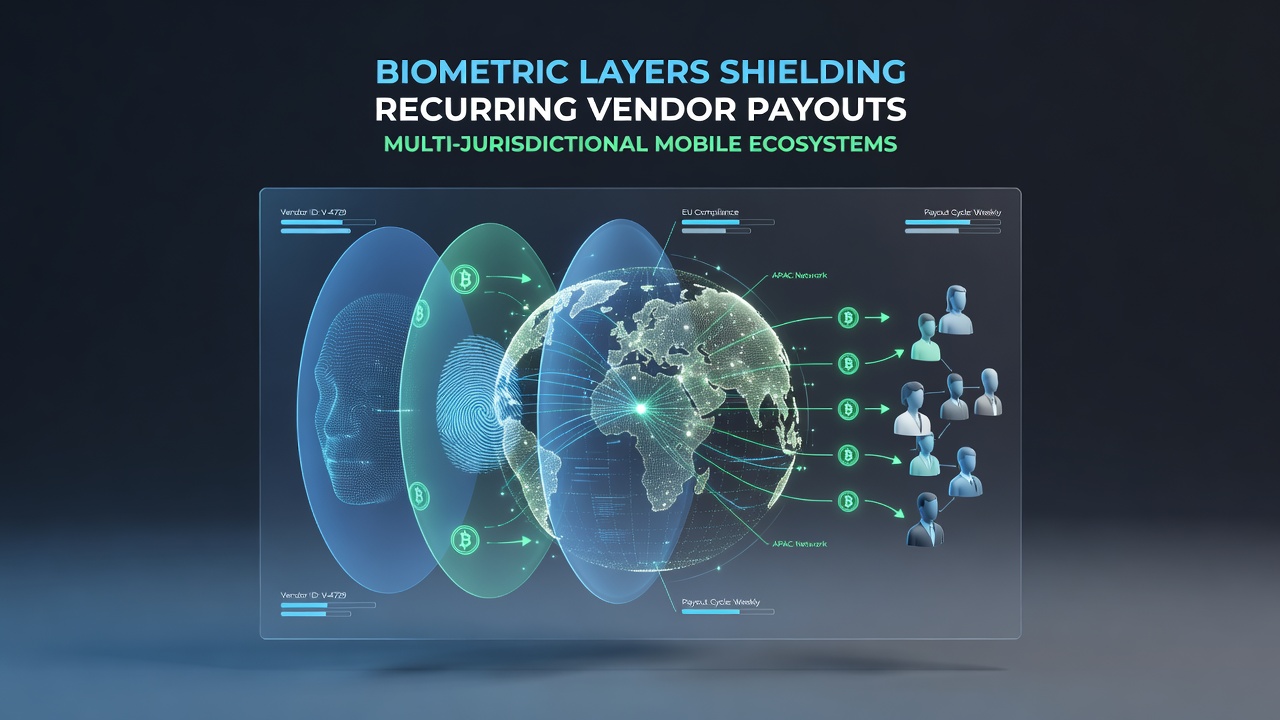
Multi-jurisdictional mobile ecosystems rely on layered biometric protocols that link device sensors directly to authorization servers, and these connections process vendor payout requests through encrypted channels while matching live biometric data against stored templates. Researchers at the University of Melbourne documented in a 2025 study how fingerprint and iris recognition work together to flag discrepancies during recurring payment sequences, which helps maintain accuracy when funds move between accounts in different countries.
Systems often incorporate behavioral biometrics as well, including keystroke dynamics and device handling patterns, yet the primary focus remains on physiological markers that stay consistent across borders. Observers note that this approach supports compliance with varying data protection rules in regions such as the European Union and Australia, where standards require explicit consent for biometric template storage.
Handling Recurring Payouts in Mobile Environments
Vendors operating in mobile ecosystems receive payouts through automated cycles that trigger biometric checks at predefined intervals, and these checks occur before funds transfer from merchant accounts to vendor wallets. Figures released by the Australian Securities and Investments Commission indicate that biometric verification cut dispute rates in subscription-based services by 25 percent during the first half of 2026, particularly when payouts crossed into multiple currencies.
Platforms synchronize these layers with existing gateway protections so that a single failed biometric match halts the entire sequence, which prevents errors from propagating through international banking networks. Experts have observed that such synchronization proves especially useful in high-volume environments where vendors manage subscriptions across several markets simultaneously.
Cross-Border Regulatory Alignment
Jurisdictions maintain distinct requirements for biometric data handling, and platforms address these differences by routing verification requests through region-specific compliance modules. The Monetary Authority of Singapore updated its guidelines in August 2026 to emphasize real-time biometric matching for recurring transfers, which aligns with similar directives from the Bank of Canada on protecting electronic fund movements.
Interoperability between these modules allows a biometric template created in one country to support authentication in another without exposing raw data, and this process relies on tokenized representations that meet local privacy thresholds. Those who have examined implementation logs report fewer compliance incidents when systems apply these standardized approaches consistently.
Technical Challenges and Solutions
Network latency in multi-jurisdictional setups can delay biometric matching results, yet developers counter this issue by deploying edge processing on mobile devices that performs initial template comparisons locally. Studies from academic teams at the Massachusetts Institute of Technology highlight how hybrid models that combine on-device and cloud verification maintain accuracy rates above 98 percent even during peak transaction periods in 2026.
Device diversity adds another layer of complexity because sensor quality varies across smartphone models, and platforms respond by calibrating algorithms to account for hardware differences while preserving security thresholds. This calibration supports uninterrupted recurring payouts for vendors who operate fleets of devices in different regions.
Future Developments in Verification Protocols
Emerging standards continue to refine how biometric layers interact with authorization sequences, and industry groups such as the International Chamber of Commerce have outlined frameworks that encourage wider adoption of multi-modal biometrics. These frameworks focus on reducing false positives that might interrupt legitimate vendor settlements in mobile ecosystems spanning several legal territories.
Integration with emerging technologies like secure enclave chips in newer mobile hardware further strengthens these protections, which allows platforms to process higher volumes of recurring transactions without compromising verification integrity. Data matching protocols now link biometric outcomes directly to reconciliation systems, which helps prevent discrepancies in international vendor accounts.
Conclusion
Biometric layers continue to evolve as essential safeguards within multi-jurisdictional mobile ecosystems that manage recurring vendor payouts, and their deployment reflects ongoing efforts to balance security needs with operational efficiency across borders. Evidence from regulatory bodies and research institutions demonstrates measurable improvements in transaction reliability when these layers operate in coordinated sequences. As platforms adapt to updated standards through 2026 and beyond, the focus remains on maintaining accurate, consent-based verification that supports global vendor operations without unnecessary interruptions.