Linking Traditional Bank Transfer Systems to Automated Client Billing Across International Borders
Paul Bennett · Sep 19, 2026

Linking Traditional Bank Transfer Systems to Automated Client Billing Across International Borders
Traditional banking rails continue to serve as foundational infrastructure for settlement processes even as automated billing expands into foreign markets, and researchers have documented steady growth in these hybrid systems over recent years. Data from cross-border payment analyses indicate that institutions route client invoices through established wire and automated clearing house networks while layering software that handles recurring charges without manual intervention each cycle. Observers note that currency conversion happens at the banking layer before funds reach the billing platform, which reduces discrepancies that once required separate reconciliation teams in each jurisdiction.
Core Mechanisms in Cross-Border Settlement Flows
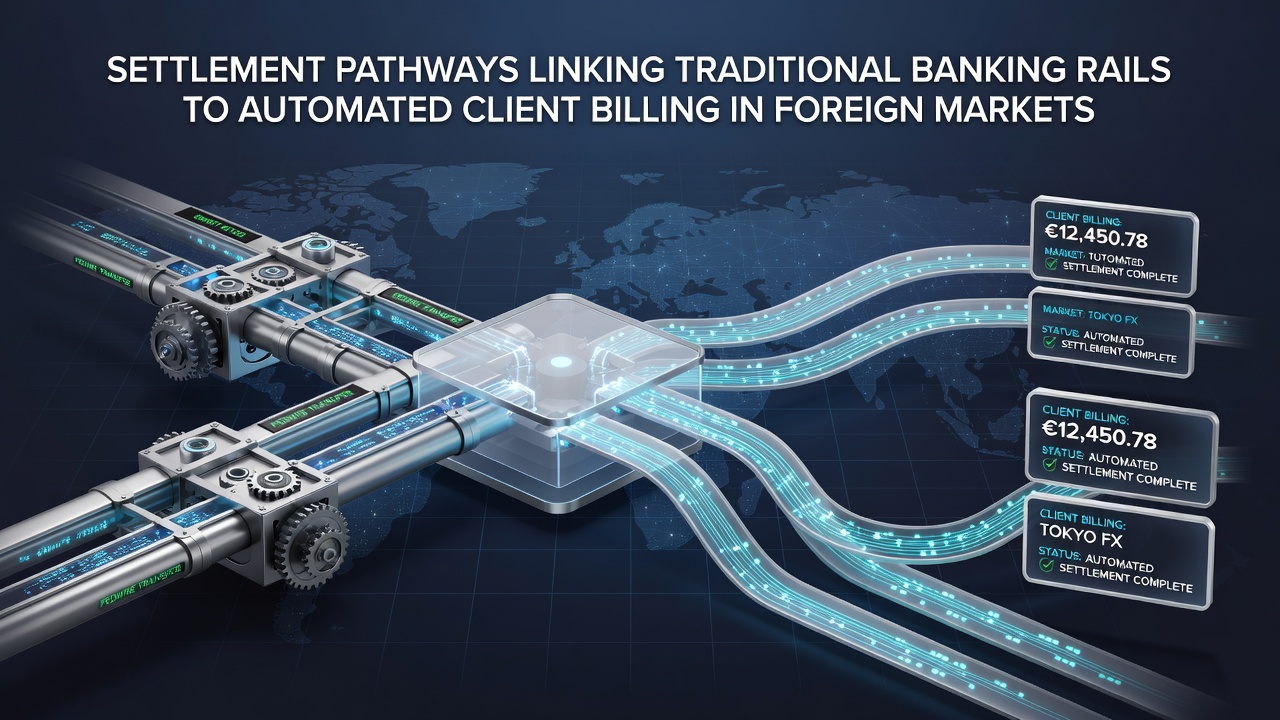
Banking rails operate through correspondent relationships that connect domestic institutions with foreign counterparts, and automated billing platforms tap into these same channels via application programming interfaces that initiate transfers on scheduled dates. Studies from payment infrastructure reviews reveal that messages formatted under ISO 20022 standards carry both the billing details and the settlement instructions in a single packet, which allows banks to validate amounts against client mandates before release. Those who have examined transaction logs across multiple regions find that this unified approach cuts processing time from several days to under twenty-four hours in many corridors when regulatory pre-checks are completed in advance.
Regulatory Timelines and Operational Adjustments
By September 2026 several jurisdictions plan to require full adoption of enhanced data fields in settlement messages, and banking networks have already begun testing these updates with automated billing providers to avoid disruptions. Evidence from pilot programs shows that foreign market operators who align their systems early experience fewer rejected transfers because the additional information satisfies anti-money laundering checks at the receiving bank. Experts tracking compliance calendars report that entities operating in both European and Asian corridors coordinate their testing schedules around these deadlines to maintain uninterrupted client billing cycles.
One study revealed that companies using direct bank-to-billing integrations reduced manual adjustments by more than thirty percent compared with those relying on intermediate processors. The reality is that legacy systems still handle the final movement of funds, while the automation layer manages invoice generation, tax calculations, and client notifications. What's interesting is how these two components exchange status updates through secure file transfers that trigger alerts if a payment stalls at any correspondent bank.
Examples from Specific Market Integrations
Take one European retailer that expanded client billing into Southeast Asian markets and discovered that routing settlements through established bank rails required mapping local clearing codes to the automated platform. Researchers documented how the company adjusted its software to accept real-time foreign exchange rates from the banking partner, which prevented overbilling when currencies moved during the billing window. Similar patterns appear in reports covering Latin American operations where institutions link local payment rails to global billing engines without replacing the underlying bank connections.
Those who've studied these setups know that reconciliation files now arrive with embedded reference numbers that tie each automated invoice directly to the bank confirmation, and this linkage supports audit trails required by regulators in multiple countries. Figures from industry surveys indicate that settlement success rates climb above ninety-five percent when billing systems incorporate bank feedback loops rather than operating in isolation.
Data Matching and Discrepancy Prevention
Automated matching protocols compare billing amounts against incoming bank credits and flag variances for review, yet most discrepancies stem from timing differences across time zones rather than outright errors. According to analyses published by the European Central Bank, cross-border systems that synchronize daily cut-off times between billing software and banking rails experience fewer unmatched items. Data matching also incorporates client reference fields that travel with the payment, which allows automated platforms to post credits to the correct account without human sorting.
But here's the thing: when foreign market regulations change withholding tax rates, the billing layer must update calculations before the next settlement run reaches the bank. Observers note that institutions maintaining shared data dictionaries between billing and banking teams avoid the mismatches that previously delayed funds for weeks.
Future Alignment of Banking and Billing Infrastructure
Industry reports from the Reserve Bank of Australia highlight ongoing work to expand real-time capabilities on traditional rails, which would allow automated billing to trigger near-instant settlements in additional foreign corridors. Those monitoring these developments point out that message standards already support richer remittance data, enabling billing platforms to include line-item details that banks forward to the recipient's accounting systems. The result is tighter integration without requiring merchants to abandon established banking relationships.
Conclusion
Settlement pathways that connect conventional banking rails with automated client billing continue to evolve through standardized messaging and coordinated regulatory timelines, and evidence shows these connections support reliable operations across foreign markets. Continued alignment between the two layers promises further reductions in processing friction as new data requirements take effect.