The Complexities of Multi-Currency Coordination in Authorization Layers for Mobile Subscriptions
Drew Ludwig · Oct 17, 2026
The Complexities of Multi-Currency Coordination in Authorization Layers for Mobile Subscriptions
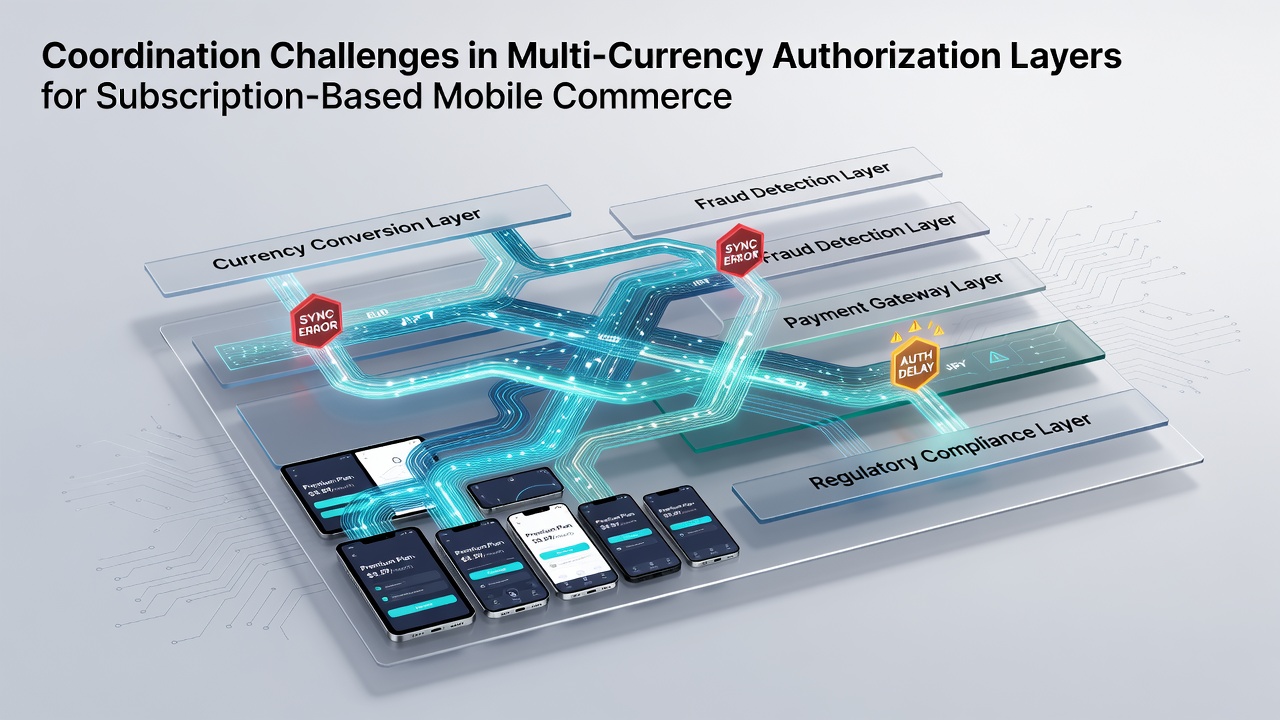
Subscription-based mobile commerce has expanded rapidly since 2024, with merchants managing recurring charges across dozens of currencies through layered authorization systems that connect mobile apps, payment gateways, and banking networks. Coordination among these layers creates persistent operational friction because each currency introduces distinct settlement rules, foreign exchange timing, and regulatory checkpoints that must align during every billing cycle.
Authorization sequences begin when a mobile application initiates a recurring charge request, yet the process quickly branches into parallel validations that involve card networks, digital wallets, and institutional accounts holding funds in different denominations. Currency conversion occurs at multiple points, and even small timing mismatches can trigger declines or partial authorizations that require manual reconciliation later.
Technical Integration Points and Timing Pressures
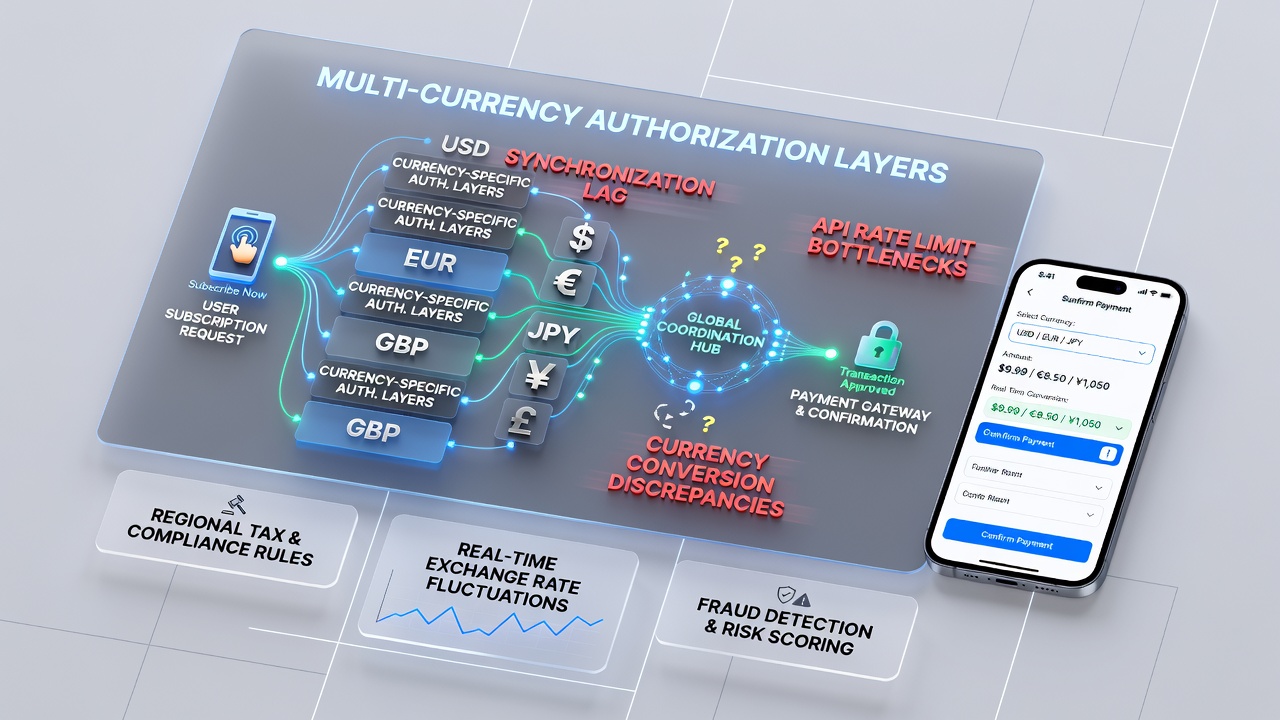
Payment gateways must synchronize authorization requests with real-time exchange rate feeds while simultaneously checking wallet balances and credit limits that may be denominated in the merchant's base currency or the customer's local currency. When a subscription renews on the first of the month, for instance, the system processes the request through an authorization layer that queries multiple endpoints within milliseconds; any delay in one currency feed can stall the entire sequence and force the gateway to retry or queue the transaction.
Researchers at academic institutions have documented how latency accumulates when authorization layers cross borders. One study from the University of Toronto examined transaction logs from 2025 and found that multi-currency subscriptions experienced average delays of 1.8 seconds longer than single-currency equivalents because each additional currency required an extra verification hop through correspondent banking channels.
Regulatory Alignment Across Jurisdictions
Different regions impose separate requirements on recurring payment authorizations, and these rules often conflict when a single subscription spans multiple markets. European Economic Area directives mandate strong customer authentication for each recurring charge above certain thresholds, while frameworks in Australia and Canada focus more on disclosure timing and refund windows. Merchants operating internationally must therefore embed jurisdiction-specific logic inside the authorization layer itself, which increases the complexity of maintaining consistent decision trees across currencies.
Data released by the Bank for International Settlements in its October 2026 quarterly review highlighted that cross-border subscription volumes grew 23 percent year-over-year, yet settlement failure rates remained elevated in markets where currency authorization protocols had not been harmonized with local consumer protection statutes. The report noted that mismatches between authentication standards and settlement finality rules accounted for a measurable share of these failures.
Reconciliation and Exception Handling
Once an authorization clears, the subsequent settlement and reconciliation stages introduce further coordination demands. Merchants receive funds in the currency of the issuing bank or wallet provider, then must convert those amounts back into their reporting currency while accounting for fees that vary by network and jurisdiction. Discrepancies arise when exchange rates used during authorization differ from those applied at settlement, creating accounting entries that require manual review or automated adjustment rules.
Industry reports indicate that subscription merchants handling five or more currencies allocate between 12 and 18 percent of their finance team hours to exception management rather than routine processing. Automated matching protocols can reduce this burden, yet they depend on clean data feeds from every participating authorization layer, a condition that proves difficult to sustain when wallet providers update their APIs or banking partners change correspondent relationships.
Case Examples from 2025-2026 Operations
One large streaming service that expanded into Southeast Asian markets during 2025 encountered repeated authorization declines when its system attempted to charge subscribers in Indonesian rupiah while simultaneously validating against USD-denominated credit lines. The company adjusted its authorization sequence to pre-authorize a buffer amount in the base currency before converting to local denominations, which reduced declines but increased temporary holds on customer accounts.
Another merchant operating a fitness application across European and North American markets discovered that wallet-based subscriptions failed more frequently than card-based ones during currency fluctuations in early 2026. Analysis revealed that certain digital wallet providers froze authorization requests when intra-day exchange rate volatility exceeded predefined thresholds, a safeguard not uniformly applied by card networks.
Emerging Approaches to Layer Coordination
Some payment processors have introduced centralized orchestration engines that sit above individual authorization layers and manage currency-specific rules through configurable workflows. These engines pull live data from multiple sources, apply jurisdiction filters, and then route requests through the least problematic path for each transaction. Early adopters reported lower retry rates, although implementation required extensive mapping of every currency pair and regulatory exception the merchant might encounter.
Observers note that continued growth in subscription volumes will likely accelerate adoption of such orchestration tools, particularly as more merchants enter markets with volatile currencies or strict recurring-payment regulations. The underlying challenge remains one of maintaining synchronized, real-time visibility across every layer involved in authorizing and settling a single subscription charge.
Conclusion
Coordination challenges in multi-currency authorization layers stem from the intersection of technical timing requirements, divergent regulatory mandates, and settlement reconciliation processes that must function together for subscription models to operate smoothly. As mobile commerce continues to globalize, merchants and processors alike rely on increasingly sophisticated integration strategies to keep authorization sequences reliable across currency boundaries. The patterns observed through 2026 suggest that ongoing refinement of these layers will remain a central operational priority for international subscription businesses.